Why the Best Retreats May Be the Ones That Ask You to Do More, Not Less
What nine people, a remote Scottish loch and a few days without reliable Wi-Fi taught me about adventure, connection and the real meaning of retreat.
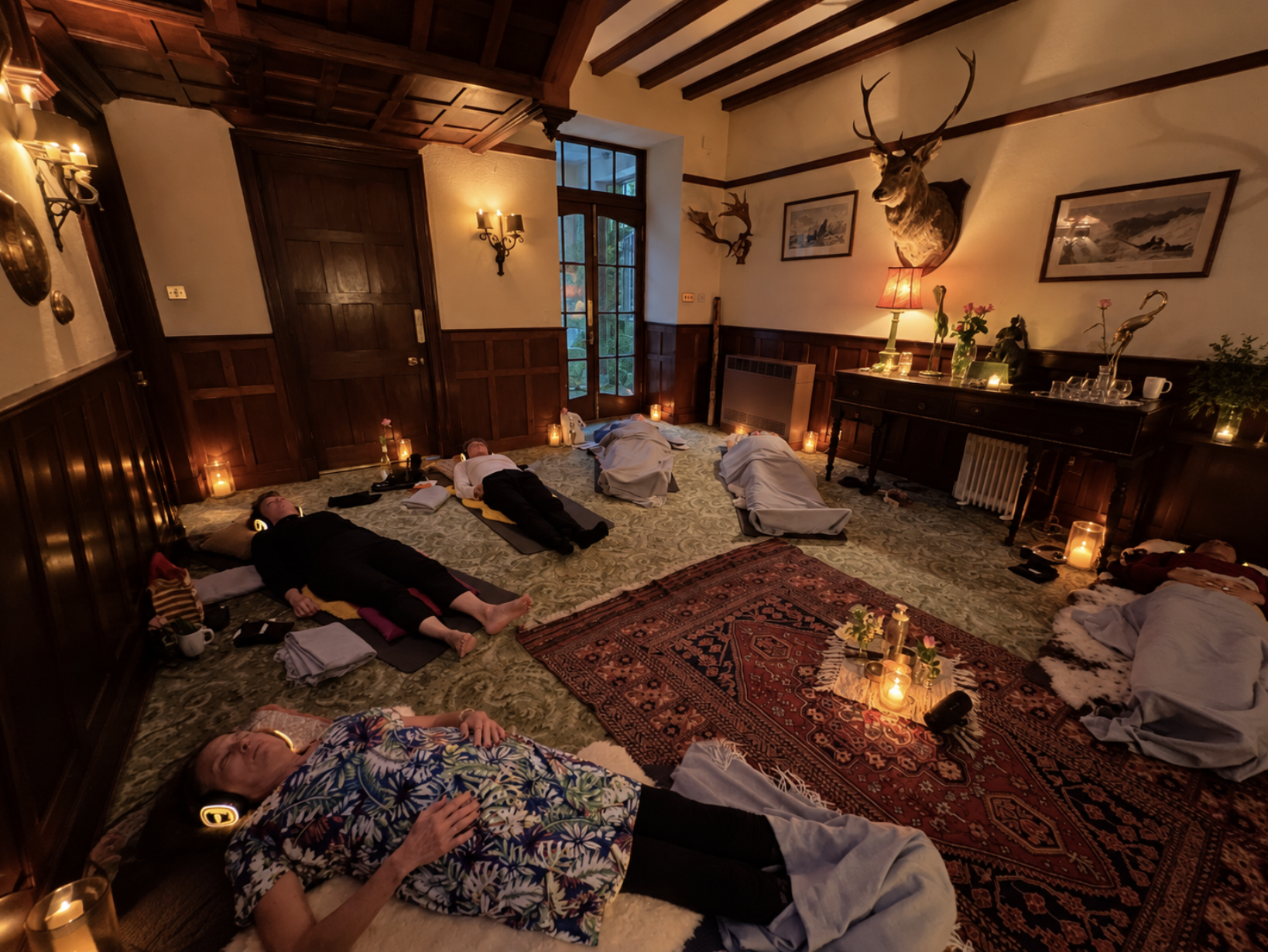
Nine people arrived at an old hunting lodge on the edge of a vast Scottish loch.
The internet was terrible.
There were no shops to wander into, no bustling hotel lobby, no poolside cocktails and very little opportunity to disappear back into ordinary life.
And that, it turned out, was rather the point.
We had come to Scotland for a retreat. But perhaps “retreat” is the wrong word for what I increasingly believe we need.
Because retreat can imply withdrawing from life. Escaping it. Resting until we have enough energy to go back and resume exactly where we left off.
What happened in Scotland felt different.
We walked. We breathed. We practised yoga. We talked about the mind, identity and the extraordinary influence our habitual thoughts can have on how we experience our lives. We cooked and learned about food, hormones and blood-sugar health. We collected fallen leaves on the way to a waterfall and later coaxed their natural pigments onto silk.
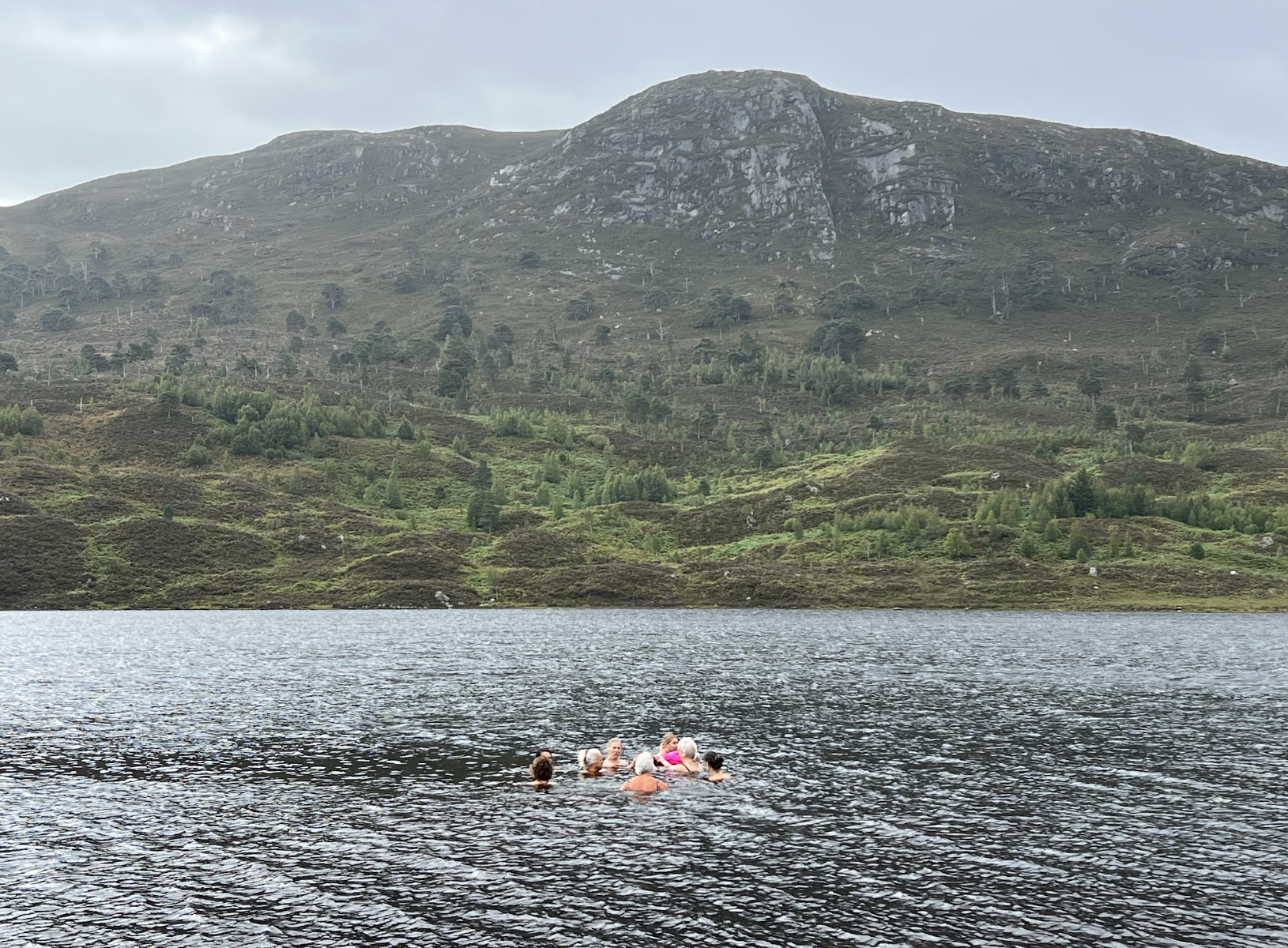
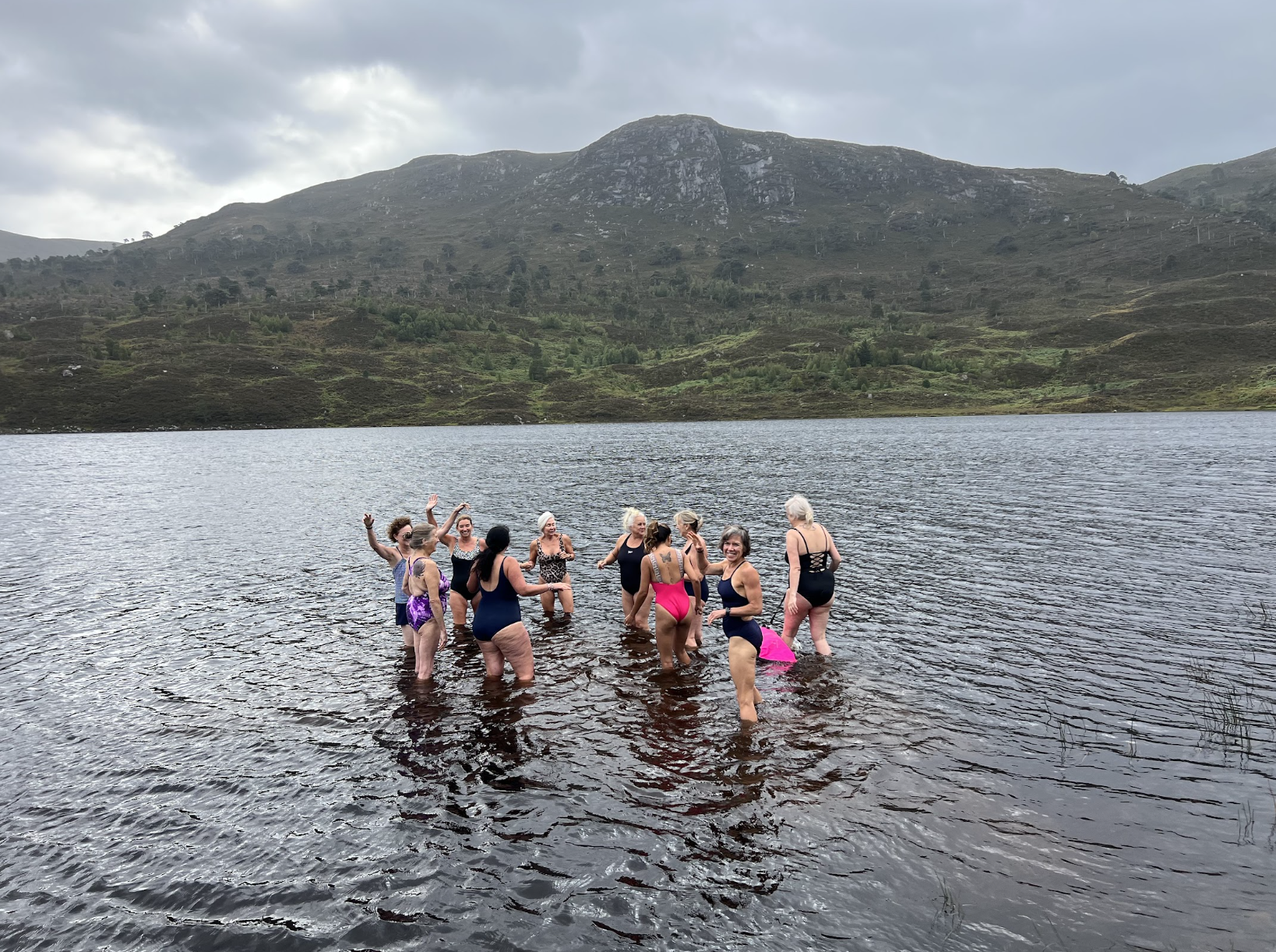
And one morning, standing at the edge of a Scottish loch, we deliberately got very, very cold.
It was restful in places, certainly.
But it was also stimulating, challenging, creative, funny, occasionally uncomfortable and deeply human.
And it has left me wondering whether we have misunderstood what makes a restorative break genuinely restorative.
The holiday paradox
There is nothing wrong with lying beside a beautiful swimming pool.
I am very partial to it myself.
But there is an interesting distinction between escaping our lives for a few days and experiencing something that changes how we return to them.
Research into holidays and wellbeing is particularly interesting here.
A 2025 meta-analysis of 32 studies found that vacations can have a substantial positive effect on employee wellbeing and that the benefits may last longer than earlier research suggested. But one detail caught my attention: psychological detachment and physical activity during a holiday appeared particularly beneficial.
In other words, perhaps restoration isn't simply about doing nothing.
Sometimes it might come from doing something completely different.
That was very much the philosophy behind Scotland.
We weren't trying to exhaust anyone. There were no heroic physical challenges, no competition and certainly no prizes for staying in freezing water longer than the person next to you.
Instead, there were invitations.
Come for a walk.
Try this.
Breathe this way.
Notice what happens.
Make something.
Get into the water if you choose.
Sit beside the fire.
Talk.
Or don't.
There is something surprisingly powerful about being removed from your usual roles long enough to discover how you behave when the normal script isn't available.
When your world becomes very small
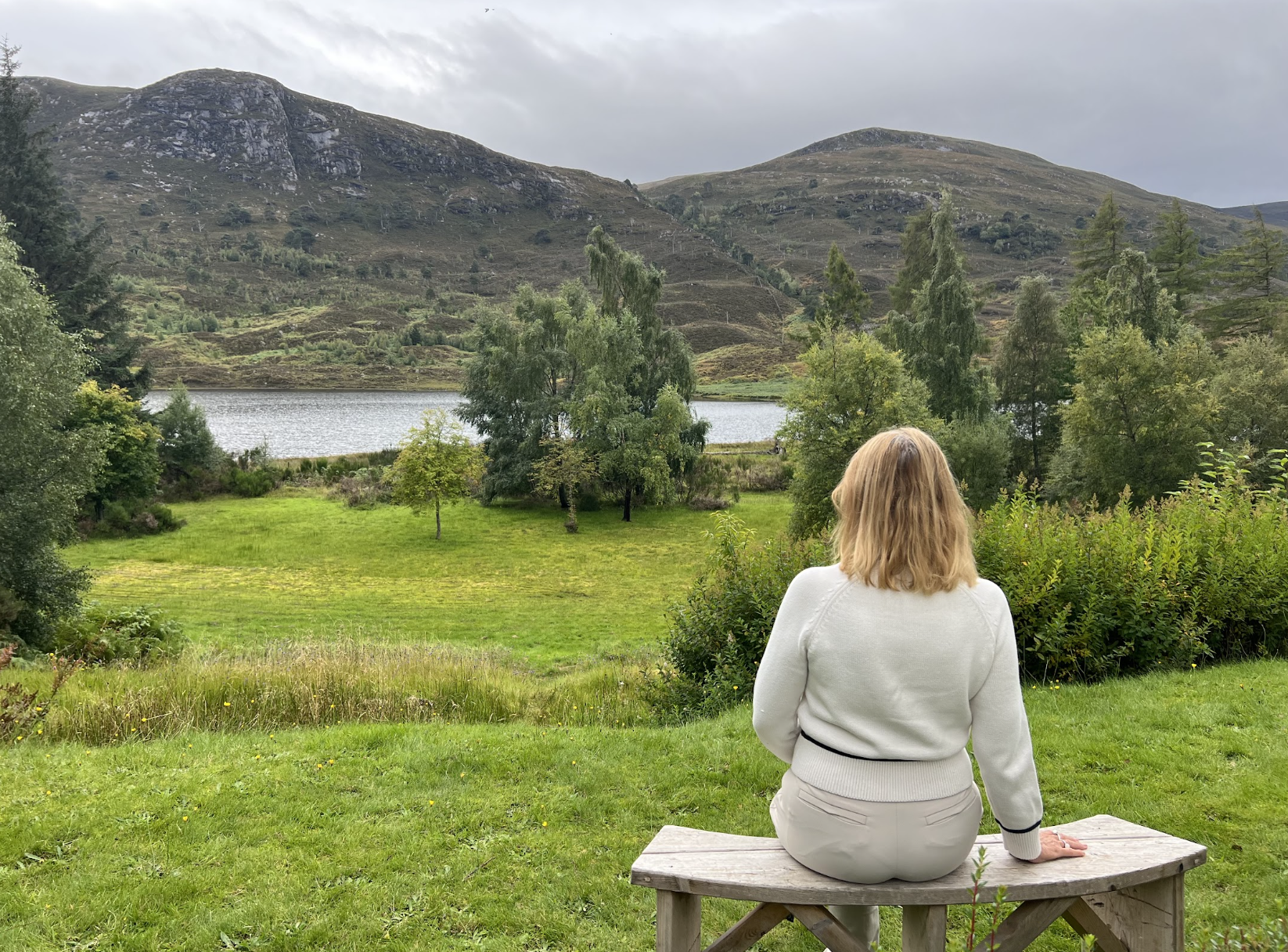
Our lodge was secluded. Properly secluded.
It was historic, atmospheric and surrounded by the sort of Scottish scenery that makes you stop mid-sentence. The weather was kinder than we had any right to expect and even produced some sunshine.
But the important part wasn't luxury in the conventional sense.
It was space.
With unreliable internet and few outside distractions, something happened remarkably quickly: time seemed to expand.
People stopped reaching for whatever came next.
Conversations grew longer. People sat beside the fire looking out across the landscape. There was laughter - lots of it - but also those wonderful conversations that somehow only happen when nobody has anywhere else they need to be.
Nature may have had something to do with this too.
Research increasingly associates exposure to nature with aspects of psychological wellbeing. A 2024 meta-analysis examining adults experiencing symptoms of mental illness found nature exposure was associated with reductions in depressive symptoms and stress and improvements in mood and quality of life. Other research has found a relationship between feeling connected with nature and measures including positive affect, vitality and life satisfaction.
Then there is awe, that peculiar feeling we experience when confronted by something sufficiently vast or beautiful that, momentarily, we become less preoccupied with ourselves.
A longitudinal study published in Scientific Reports found that on days people experienced more awe, they also reported less stress and greater wellbeing. It doesn't prove that a Scottish waterfall is a medical intervention, and I wouldn't suggest that it does, but it gives scientific language to something humans have probably understood intuitively for centuries.
Sometimes it is useful to stand beside something much bigger than your problems.
The adventure doesn't have to be extreme to matter
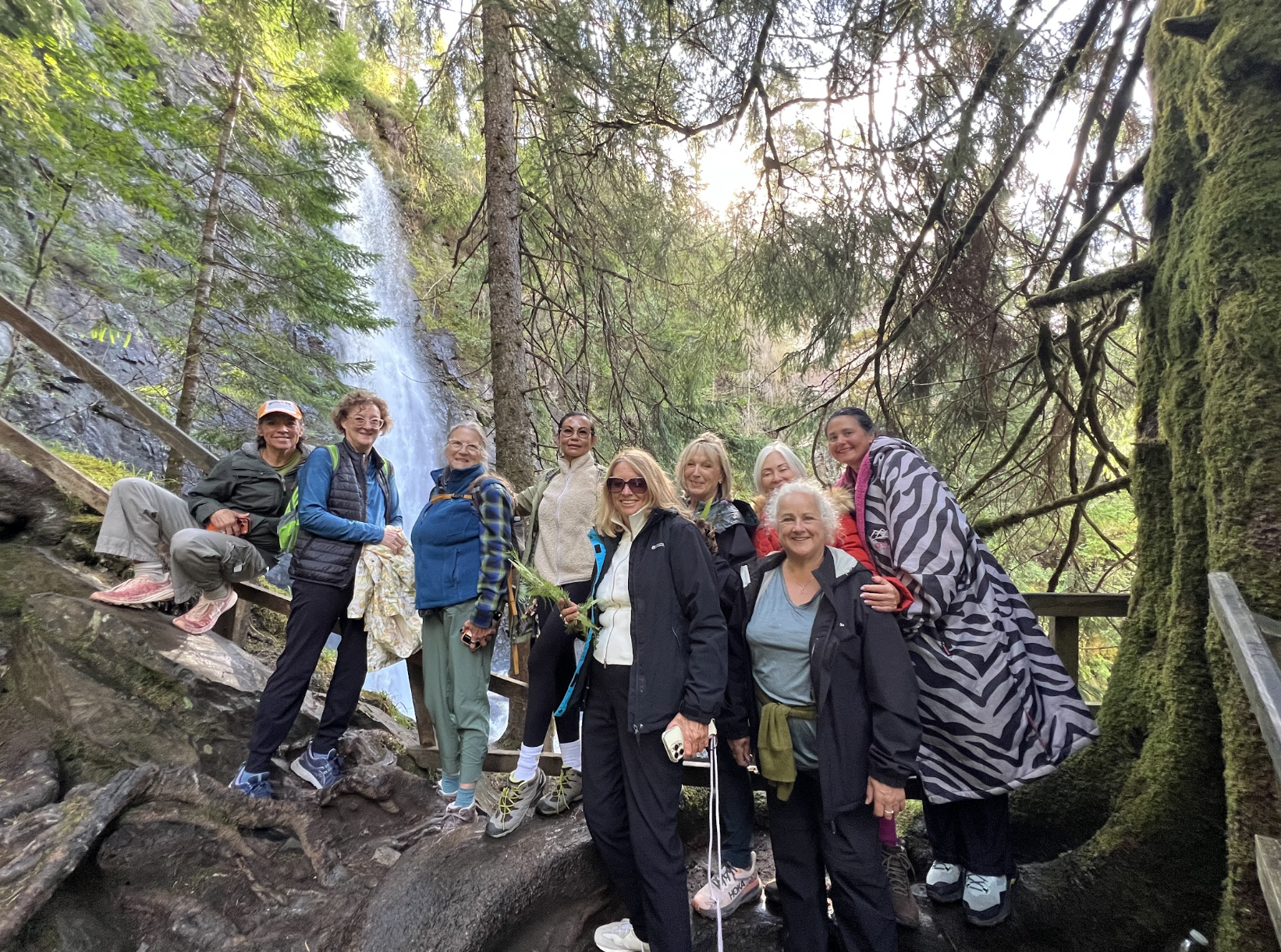
One of our walks took us to a powerful waterfall.
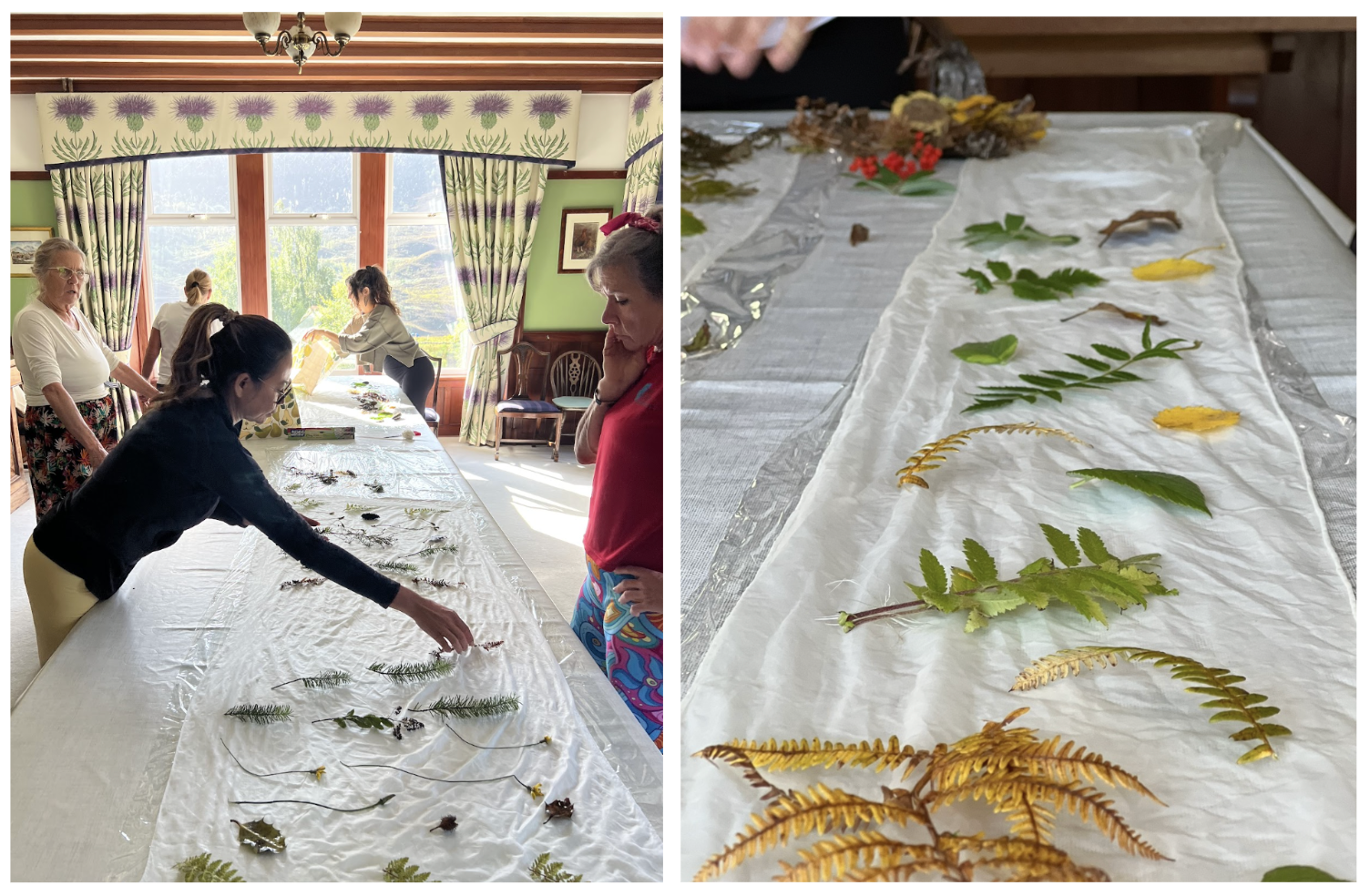
Along the way, we collected leaves and plant material that had fallen naturally to the ground.
Later, during an eco-printing workshop, we used what we had gathered to draw out the plants' natural dyes and transfer their shapes and colours onto silk scarves.
There was something lovely about that process.
We had walked through the landscape, paid attention to it, collected pieces of it and then created something with our hands.
The Scottish landscape quite literally left its imprint.
That combination of exploration and reflection is something I have become increasingly interested in.
Many of us travel because we want to experience somewhere new. Yet adult life can make us surprisingly reluctant beginners.
We gravitate towards what we already know we can do.
Adventure - used in its broadest sense - gives us opportunities to interrupt that.
You don't have to climb a mountain.
Adventure might simply mean getting into a loch when every cell in your body is questioning your decision.
About that cold water…
Our cold-water experience was led by someone with a rather wonderful connection to the retreat itself.
Two years earlier, she had attended one of my retreats as a participant.
Her experience affected her so profoundly that she subsequently trained in cold-water therapy and other somatic modalities. This year, she returned, this time as the qualified practitioner guiding the group.
I loved the circularity of that.
Before anybody entered the loch, she delivered a trauma-informed workshop explaining the practice, the potential benefits, the body's response and, crucially, how to approach cold water safely.
Then we went in.
Some stayed longer than others.
That didn't matter.
The achievement wasn't endurance.
It was experiencing the moment.
Cold-water immersion has acquired almost mythical status in parts of the wellness world, so it is worth separating enthusiasm from evidence.
A 2025 systematic review of 11 studies involving 3,177 participants found some potentially beneficial effects, including a reduction in stress at one measured time point and indications of improvements in sleep quality and quality of life. But the researchers were equally clear that the evidence remains limited, with relatively few randomised trials, small samples in parts of the evidence base and unanswered questions about long-term effects and optimal protocols.
I actually find that more interesting than extravagant claims about cold water “fixing” everything.
We don't need to exaggerate an experience to make it worthwhile.
Sometimes doing something unfamiliar, safely and voluntarily, surrounded by people who are doing it alongside you, is enough.
Why breath became part of the adventure too
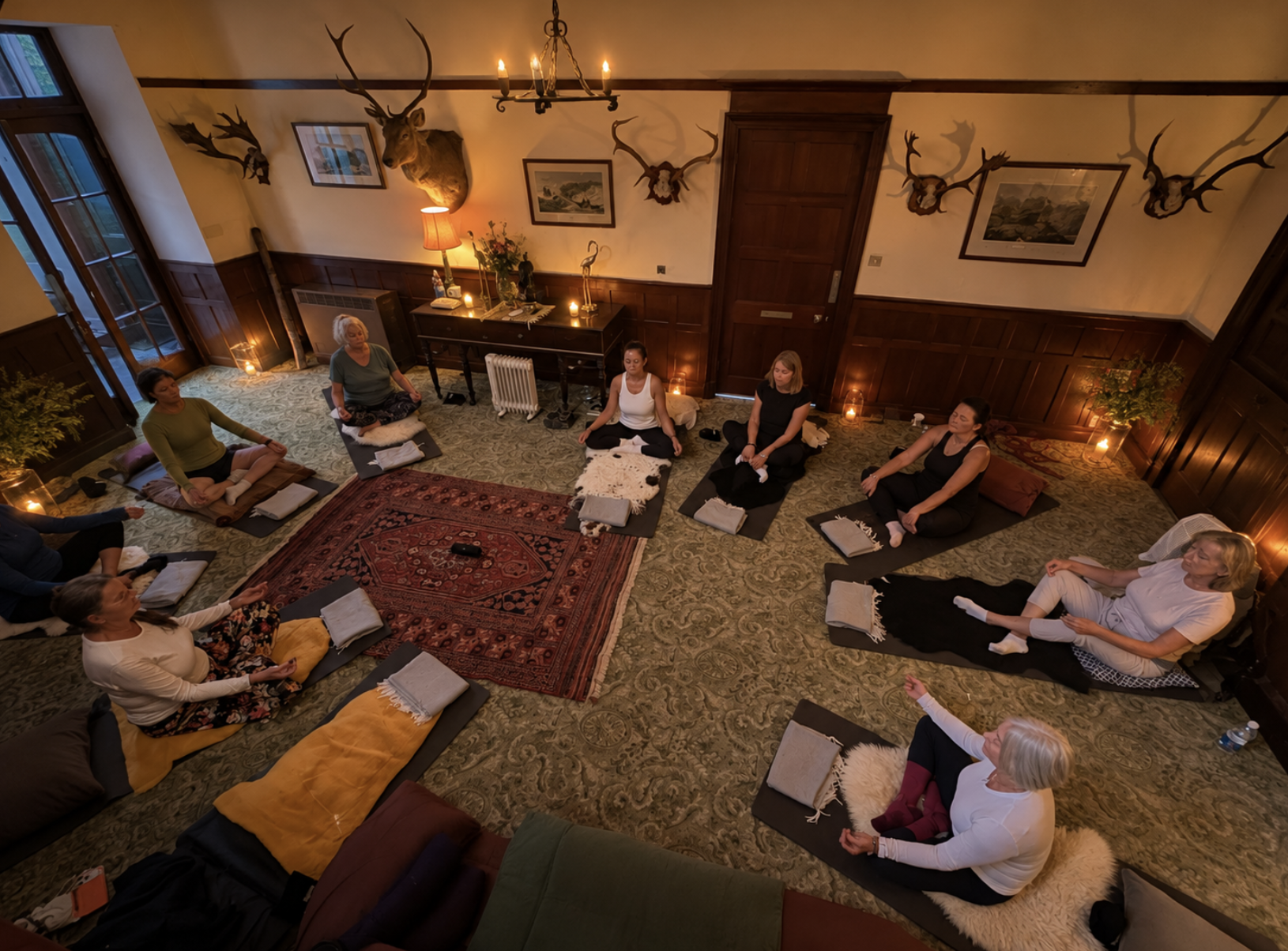
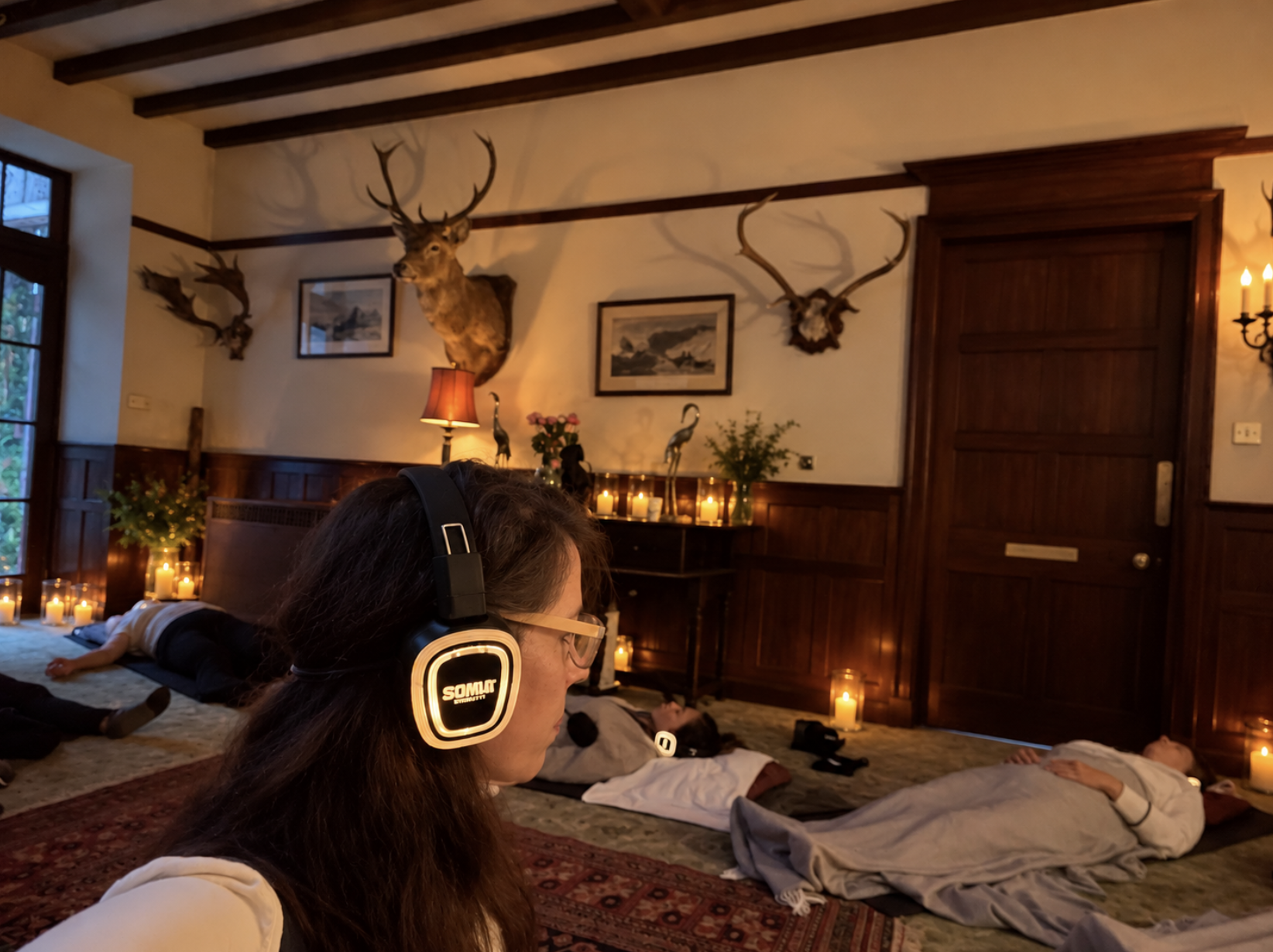
Every day there was yoga and breathwork.
Part of my intention was practical: I wanted everyone to leave with tools they could actually use at home.
The breath is particularly useful because it requires no equipment, subscription or special location. Learning to work consciously with it can offer people another way of responding when they notice themselves becoming stressed or overwhelmed.
There is emerging research behind this.
A meta-analysis of randomised controlled trials published in Scientific Reports found breathwork was associated with lower self-reported stress compared with control conditions, with similar findings for anxiety and depressive symptoms. Importantly, the researchers also urged caution: much of the evidence carried a moderate risk of bias and they warned against allowing enthusiasm to outrun the science.
That balance matters to me.
On retreat, breathwork isn't presented as a magic trick.
We explore it experientially.
We also use those sessions to go deeper.
Who am I beneath the identities I've accumulated?
Which thoughts have I repeated so often that I now experience them as truth?
What might change if I became more conscious of the way I speak to myself?
How much of the next chapter of my life is being determined by assumptions I formed in an earlier one?
One participant had an extraordinarily deep experience during one of these sessions. Watching it unfold reminded me that occasionally something happens when we create enough quiet, safety and space that cannot easily be captured on an itinerary.
You can schedule the breathwork.
You cannot schedule what somebody discovers in it.
Perhaps we don't always need to tell our whole story
This may have been my biggest lesson from Scotland.
I watched nine people form remarkably strong connections without requiring everyone to reveal their entire history.
There is a tendency in some personal-development spaces to assume that intimacy requires disclosure - that in order to heal, connect or be supported, we must excavate our pain and explain it to the room.
I don't think that is always necessary.
Sometimes another person doesn't need to know every detail of what happened to you to sit beside you.
We can walk together.
We can breathe together.
We can laugh uncontrollably over dinner.
We can get into freezing water together.
We can make things, eat together, talk by the fire and recognise something of ourselves in one another without knowing every chapter that came before.
And paradoxically, when disclosure isn't demanded, people sometimes choose it.
One guest later described having been able to show vulnerability “without fear” and feeling genuine support around challenges usually faced alone.
Another had expected to gain some tools for personal change but was surprised to find herself able to share struggles she had carried silently for decades.
Her conclusion was beautifully simple:
“You do not need to make changes alone.”
That may be one of the most important things we took home.
The health benefit we don't talk about enough
When we discuss wellness, conversation tends to gravitate towards food, exercise, sleep, supplements and stress management.
We talk less about friendship.
Yet the evidence around social relationships deserves attention.
One landmark analysis combined 148 studies involving more than 300,000 participants and found that people with stronger social relationships had a 50% greater likelihood of survival during the studies' follow-up periods than those with weaker social relationships. That doesn't mean attending a retreat increases your lifespan by 50%; it means that across those populations, social connection was strongly associated with survival, illustrating just how consequential our relationships can be to health.
Connection isn't a frivolous extra.
And perhaps this is where small retreats become particularly interesting.
There were nine of us.
Nobody could disappear anonymously into a crowd.
By the end, people were already discussing where we might go together next.
I could genuinely imagine this same group meeting again somewhere completely different.
Small is not simply a number
There is another reason I deliberately keep these retreats small.
Before anyone books, I speak to them.
That takes time.
It would certainly be more efficient not to.
But group dynamics matter enormously when you're asking people to travel, share a home, try unfamiliar experiences and spend several days together.
A small group can be magical when the chemistry works. It can be uncomfortable when it doesn't.
So I take the human side of curating a retreat very seriously.
I want to know who is coming.
I want them to know who I am.
I want to understand what they are looking for and whether what I offer is actually appropriate for them.
This kind of individual attention rarely appears on a retreat itinerary.
Neither does the thought involved in selecting practitioners, planning meals, creating sessions, balancing activity with rest, noticing when somebody needs encouragement and noticing when somebody needs space.
Yet increasingly I think these invisible elements are where much of the value lies.
It is closer to hospitality in its oldest meaning: care for the person who has arrived.
What does luxury actually mean?
This brings me to an interesting question.
When people look at the price of a retreat, they sometimes compare it with the headline price of a luxury holiday.
“I could have a week in a five-star hotel for that.”
Perhaps.
But are we comparing the same things?
Add the meals. The classes. The workshops. The specialist practitioners. The excursions. The teaching. The activities. The personal attention. The preparation. The small-group environment.
More importantly, compare what you are purchasing.
A conventional luxury holiday is primarily selling accommodation, service and leisure.
A well-designed retreat is trying to create conditions for an experience.
Neither is inherently better.
Sometimes I want the five-star hotel.
But they aren't interchangeable products simply because both involve packing a suitcase.
And there is something else.
Alcohol often becomes the punctuation mark of adult leisure: airport drink, lunchtime wine, sundowner, dinner, nightcap.
Again, there is nothing inherently wrong with enjoying a glass of wine.
But what happens when the adventure itself becomes the treat?
A waterfall.
A loch.
A walk somewhere you've never been.
Making something with your hands.
Learning what your breath can do.
Eating food designed to support you.
Meeting people you would never otherwise have met.
Going to bed pleasantly exhausted because you have actually inhabited the day.
That feels like a different definition of indulgence.
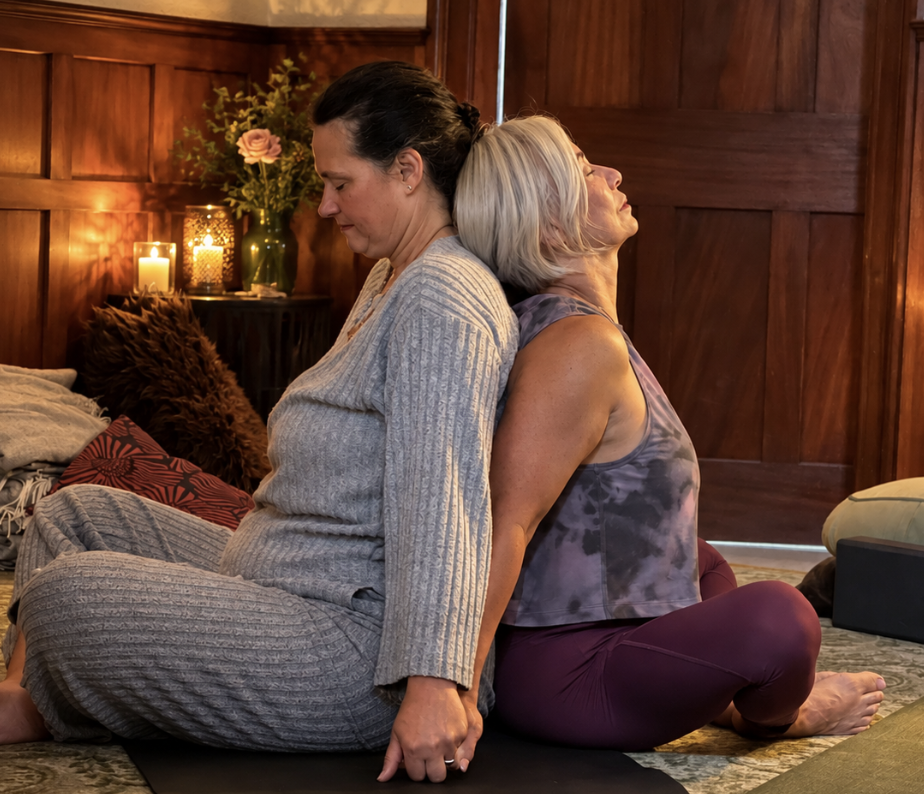
The change I can see
There is something I notice repeatedly at the beginning of retreats.
Shoulders.
They arrive somewhere around people's ears.
People come through the door carrying luggage, of course, but also emails, deadlines, family responsibilities, uncertainty, decisions, expectations and the residue of lives lived at speed.
Then, gradually, their bodies seem to change.
By the final day, they stand differently.
Shoulders drop.
Faces soften.
Smiles become easier.
People seem taller.
One guest arrived in Scotland describing herself as completely overwhelmed, scattered and panicked about what came next.
When she left, she described feeling “deeply grounded, renewed, centred” with a sense of “inner peace and quiet strength.”
Another summed up her experience rather differently:
“Gorgeous place, sublime food, lovely yoga, powerful breathwork, amazing walks in nature, great people.”
I like both descriptions.
Because a retreat doesn't have to choose between profundity and pleasure.
There should be breakthroughs.
There should also be pudding and laughter.
The scarf you take home
Near the end of our time together, there were silk scarves carrying the shapes and pigments of leaves we had picked up from the Scottish ground.
I kept thinking about those scarves.
Not because everyone needs a souvenir.
But because they represented something about the retreat that I hadn't consciously planned.
We spend so much of our lives trying to manufacture change.
We set goals. Make plans. Buy notebooks. Download apps. Promise ourselves that Monday will be different.
Sometimes that works.
But sometimes change happens less dramatically.
An experience leaves an imprint.
A conversation stays with us.
We discover we are braver than we thought.
We learn one breathing practice and remember it during a difficult Tuesday three months later.
We meet someone and realise we aren't the only person asking certain questions.
We stand beside a waterfall and, for ten minutes, stop thinking about ourselves.
We enter cold water.
We laugh.
We make something beautiful.
We sleep.
And somewhere in all of that, without forcing it, something shifts.
Perhaps this is what I now think a retreat can be at its best.
Not an escape from real life.
Not an intensive programme for fixing yourself.
And not a luxury holiday with yoga added to the itinerary.
It is a temporary change of conditions.
Enough distance from ordinary life to hear yourself think.
Enough activity to remember what your body can do.
Enough quiet to notice what has been drowned out.
Enough novelty to interrupt your usual patterns.
Enough care to feel safe exploring something different.
And enough other humans around you to remember that whatever your next chapter contains, you were never supposed to navigate all of it alone.
Nine people came to a remote lodge beside a Scottish loch.
A few days later, they packed their scarves, their muddy walking shoes and everything else back into their suitcases.
The shoulders, thankfully, stayed down.
And perhaps that is the kind of souvenir worth travelling for.